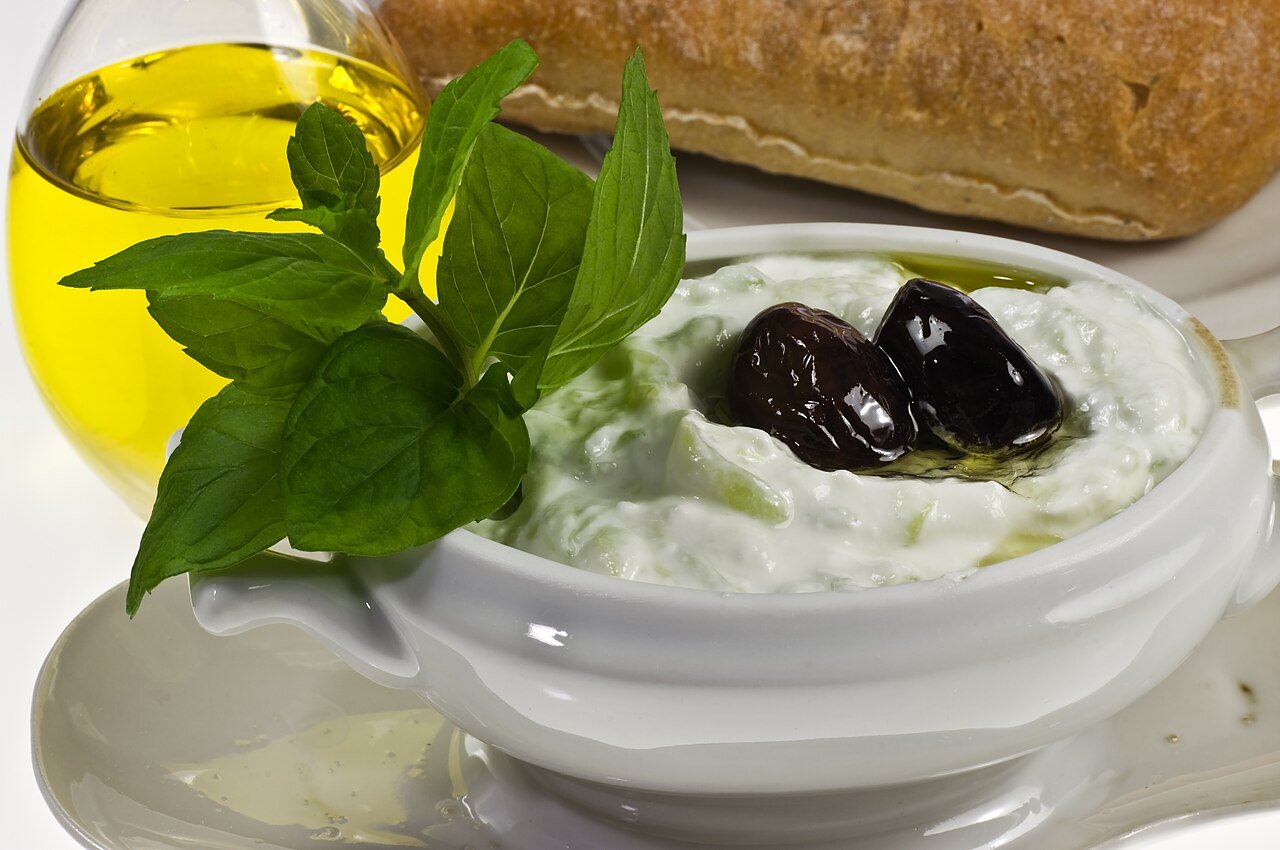
Ingredients
Metric weights use grams. US weights use ounces; liquids use fluid ounces. Conversions are rounded. Spoon measures use 5 ml teaspoons and 15 ml tablespoons; cups use 240 ml.
Serves 4
Cucumber
Dip
Equipment
Kitchen scales; measuring jug and spoons; knife; cutting board; mixing bowls.
Check all product labels and cross-contact. Diet groups describe this listed recipe, not every substitution.
Steps
Drain · About 10 min
- Toss 300 g cucumber, grated, ¼ tsp salt with its salt, stand 10 minutes and squeeze dry in a clean towel.
Mix · About 5 min
- Fold cucumber into 400 g thick Greek yogurt, 15 ml olive oil, 20 ml lemon juice, 10 g garlic, grated, 15 g dill, chopped.
Chill · About 10 min
- Refrigerate 10 minutes before serving. Taste after chilling; garlic strengthens as it stands.
Tips
- Drain cucumber so the dip stays thick.
- Judge Tzatziki by the texture and doneness signs in its steps. Your pan and heat affect how long Tzatziki takes to cook.
Substitutions
- Use mint instead of dill.
Storage
- Get perishable Tzatziki into the fridge within two hours, or within one hour above 32°C / 90°F. Eat Tzatziki within two days, keeping it covered at 4°C / 40°F or colder.
- Bring cooked Tzatziki to 74°C / 165°F, stirring or turning it for even heating. When Tzatziki is part of the meal, serve cold salads, dips and chilled desserts straight from safe refrigeration.
Make ahead
- A few hours before making Tzatziki, wash and dry the fresh ingredients, then refrigerate them. Assemble Tzatziki close to serving and keep perishable ingredients cold.
FAQ
What matters most when making Tzatziki?
Drain cucumber so the dip stays thick.
What can I substitute in Tzatziki?
Use mint instead of dill.
Can I prepare Tzatziki ahead?
A few hours before making Tzatziki, wash and dry the fresh ingredients, then refrigerate them. Assemble Tzatziki close to serving and keep perishable ingredients cold.
Food safety references
FoodSafety.gov: cooking temperatures · Food Standards Agency: rice storage and reheating


