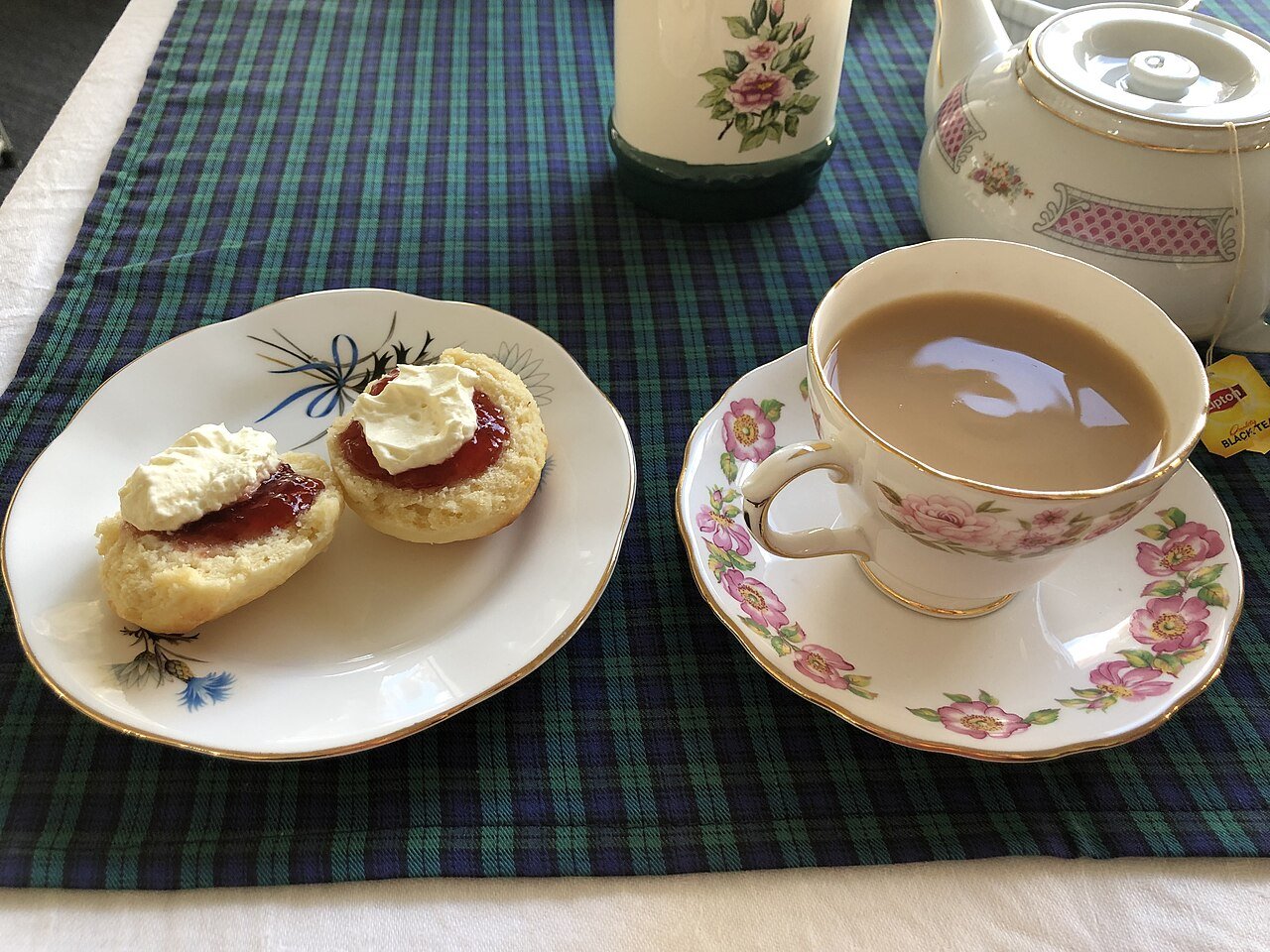
Ingredients
Metric weights use grams. US weights use ounces; liquids use fluid ounces. Conversions are rounded. Spoon measures use 5 ml teaspoons and 15 ml tablespoons; cups use 240 ml.
Serves 6
Dough
Top
Equipment
Bowl; knife; cutter; lined tray; oven; rack; brush.
Check all product labels and cross-contact. Diet groups describe this listed recipe, not every substitution.
Steps
Rub in butter · About 8 min
- Heat oven to 220°C / 425°F. Mix 300 g plain flour, 3 tsp baking powder, 50 g caster sugar and ¼ tsp salt. Rub in 75 g cold butter, cubed until the mixture resembles fine crumbs.
Bring together
- Add 170 ml milk; stir with a knife until a soft dough forms. Turn onto a lightly floured board and fold together gently.
Check: Do not knead heavily or eat raw dough.
Cut · About 5 min
- Pat to 2 cm thick. Cut twelve small rounds, gathering scraps gently. Place on a lined tray and brush with 15 ml milk for brushing.
Bake · About 15 min
- Bake for 12–15 minutes; cool on a rack.
Check: Scones rise and the tops and bases are lightly golden.
Tips
- Cold butter keeps the crumb tender.
- Press the cutter straight down rather than twisting.
Substitutions
- Use buttermilk instead of milk for a tangier flavour.
- Add a small handful of raisins for a different version.
Storage
- Wait until Scones is completely cool before covering it. Plain baked Scones keeps airtight for up to two days; adding perishable fillings means it needs refrigeration.
- If Scones is bread or scones, use a moderate oven for a brief warming. Serve Scones at room temperature if it is cookies or muffins. Cooled portions of Scones can be frozen for up to two months.
Make ahead
- Measure dry ingredients and cube butter one day ahead; keep butter cold.
- Bake close to serving, or freeze cooled scones.
FAQ
Why are they dense?
The dough may have been overworked or baking powder old.
Can I use self-raising flour?
It has a different raising-agent amount. This recipe is measured for plain flour and baking powder.
How many does it make?
The base recipe makes twelve small scones, or two per serving.
Food safety references
FoodSafety.gov: cooking temperatures · Food Standards Agency: rice storage and reheating


