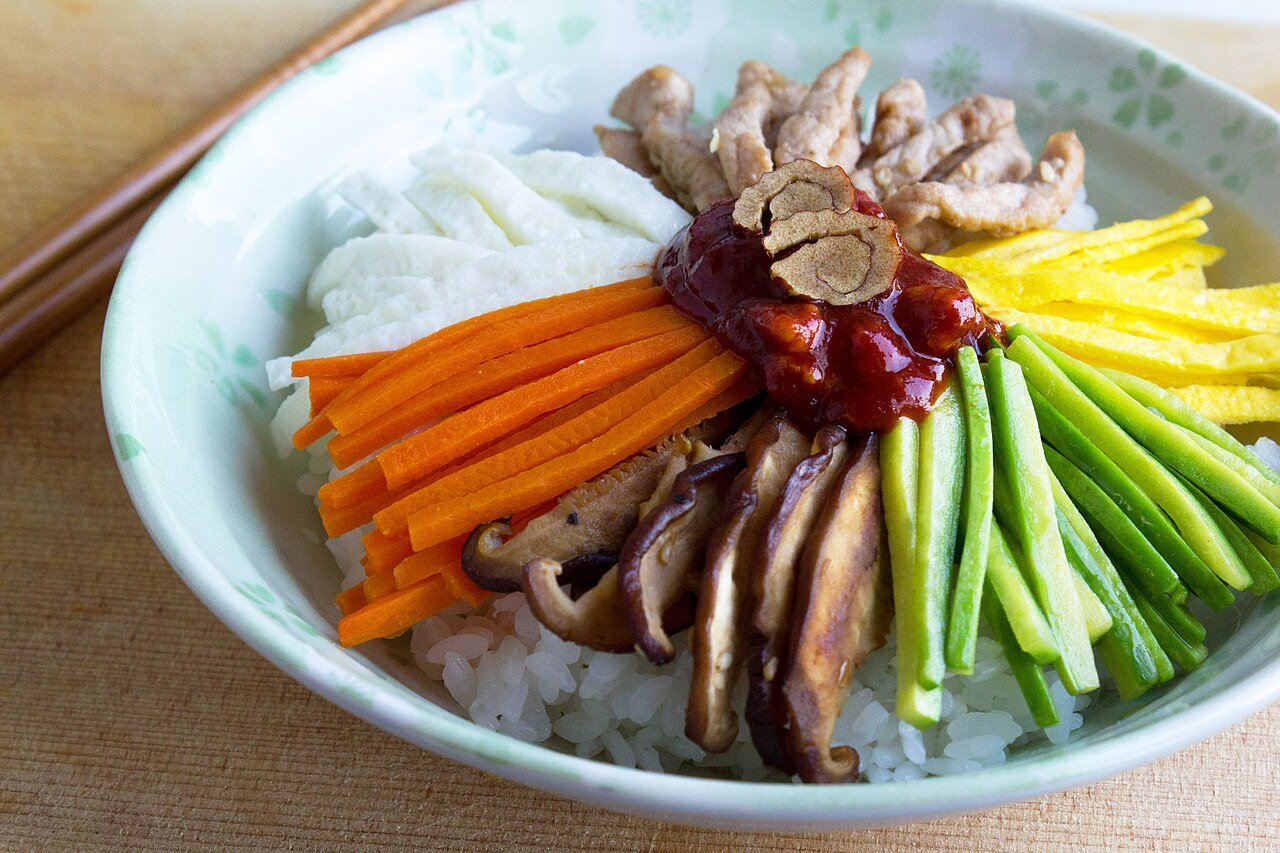
Ingredients
Metric weights use grams. US weights use ounces; liquids use fluid ounces. Conversions are rounded. Spoon measures use 5 ml teaspoons and 15 ml tablespoons; cups use 240 ml.
Serves 4
Rice
Pan
Sauce
Equipment
Kitchen scales; measuring jug and spoons; knife; cutting board; mixing bowls; saucepan with lid; sieve; heavy frying pan; spatula; food thermometer; heatproof spoon; spatula.
Check all product labels and cross-contact. Diet groups describe this listed recipe, not every substitution.
Steps
Rice · About 15 min
- Rinse rice from 300 g short-grain rice, 420 ml water, drain, add measured water and simmer covered 15 minutes. Rest covered 10 minutes.
Toppings · About 9 min
- Use oil from 25 ml neutral oil, 300 g minced beef, 200 g carrots, shredded, 200 g zucchini, sliced, 200 g spinach, 20 ml soy sauce to fry vegetables separately for 2–4 minutes each. Fry beef with soy sauce for 7–9 minutes until 71°C / 160°F.
Check: Look for this result: 71°C / 160°F.
Serve · About 8 min
- Mix 40 g gochujang, 15 ml sesame oil, 15 ml rice vinegar, 10 g sugar. Arrange rice and toppings in bowls; add sauce and mix at the table.
Tips
- Cook vegetables separately to retain their textures.
- Judge Bibimbap by the texture and doneness signs in its steps. Your pan and heat affect how long Bibimbap takes to cook.
Substitutions
- Use crumbled firm tofu instead of beef.
Storage
- Cool Bibimbap in shallow portions and refrigerate promptly, ideally within one hour. Finish Bibimbap within 24 hours, keeping it at 4°C / 40°F or colder.
- Reheat the cooked rice in Bibimbap once, until it steams throughout and reaches 74°C / 165°F. If serving Bibimbap as a cold rice dish, keep it refrigerated until serving.
Make ahead
- Prepare the measured ingredients for Bibimbap one day ahead. For Bibimbap, refrigerate chopped vegetables apart from the other perishable ingredients. Follow the cooking stages for Bibimbap on the day of serving.
FAQ
What matters most when making Bibimbap?
Cook vegetables separately to retain their textures.
What can I substitute in Bibimbap?
Use crumbled firm tofu instead of beef.
Can I prepare Bibimbap ahead?
Prepare the measured ingredients for Bibimbap one day ahead. For Bibimbap, refrigerate chopped vegetables apart from the other perishable ingredients. Follow the cooking stages for Bibimbap on the day of serving.
Food safety references
FoodSafety.gov: cooking temperatures · Food Standards Agency: rice storage and reheating


